The Abandoned Project
2026 Me: Bipolar is a hell of a thing. I really hate that in both instances where I’ve felt inspired to create a website and do art projects, it was preceded by a manic episode. I’d really like to think I have more control over my mental faculties than that, and when my medications are working (like they are now), I do, so regardless of what’s led me to this place, I’m here now and I’m wanting to share stuff.
I’m starting this blog off by scrounging up the scraps of a partially finished photo project I was inspired to create back in 2024, following my first manic episode that was incredibly consequential for me. In fact, it was the consequences that led me to abandon the project altogether, because the concept I was exploring with it, masculinity, was something that was a crucial element contributing to my first experience of manic psychosis, and I was also too depressed to even think about photography, let alone follow up on a project related to the reason I was depressed. To clarify, this project is not in reference to the most recent project I’ve ranted and raved about. That one is basically done, I just need to figure out printing paper copies for it (which costs money).
It’s somewhat comical, the reason I felt so much shame about this project. One of the big triggers for my first manic episode, the trigger that was closest in relation to when I began experiencing symptoms, was listening to an audiobook. I was listening to The Will To Change by bell hooks, and her chapter on spirituality as it relates to male love sent me over the edge. That’s right, a white guy listened to bell hooks once and lost his fucking mind. I wish I was joking.
Today, I had a conversation with a friend, who I originally wanted to interview as part of the project before abandoning it, and the conversation inspired me to pick it back up and just make something out of what was left behind. So what I’ll do with this first blog post is throw together the scraps of this initial project, which explored concepts related to masculinity and photographing reactions to questions in an interview format with a few friends that I chose for specific reasons. I’ll share the brief blog entries associated with each person, and will add some present day commentary along the way. So, without further ado, here is The Abandoned Project:
2024 Me: Title: David The Indominable: There’s no better way to start writing for this project than by sitting in David’s living room within earshot of his musical endeavors. It’s an honor and a privilege because I know how secretive he’s being with his second album. It makes perfect sense too, given our history and friendship. Last time I came to visit he was working on his first album. We talked for hours on end because there’s always a lot to catch up on when you don’t share a wall with your best friend anymore.
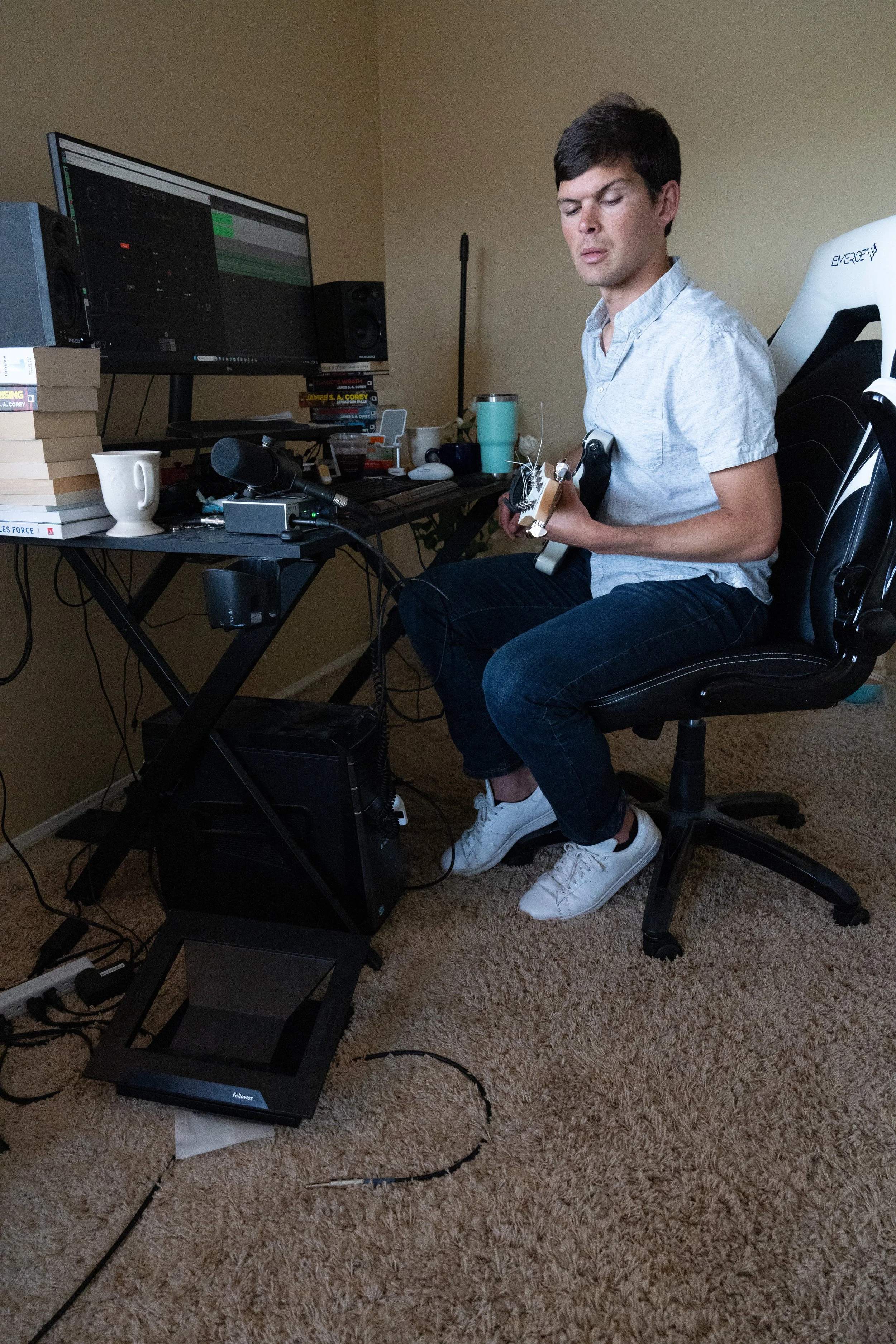
David, in the lab
This visit was no different: lots of catching up, lots of food, lots of bro-time, and this time he wasn’t the only one working on a project! We’re also both at a challenging crossroads in our lives. I haven’t been publicly open about my struggles, but long story short, I was away from work managing mental health stuff during this trip (stuff that will likely get a blog of its own in due time). David, however, has been pretty open about his ongoing job search and how that is affecting his living situation, and has also been open about his struggles with depression. It was these challenges that prompted one of the questions I had for him on this trip.
Before I get all the way into the question and David’s response, I think it would be helpful to talk a little bit more about him, our relationship, and how I see him. David Alan Garcia’s life started upside down, and he’s had multiple other moments where his life was turned upside down again. It’s not really my place to share the details in a blog, but I think it’s safe to say that there have been plenty of moments where his identity has been called into question, and at the core of all this, for better and worse, has been his family. His chosen family and best friends certainly know more of the nitty gritty details. Beyond those concentric circles, people know David absolutely shreds the fuck out of a guitar and that he’s been openly atheist/agnostic since high school.
I met him through my younger brother and bonded over video games and poker. When we became roommates in college, I saw just how passionate he becomes when he sets his mind on a goal. I’ve always envied his willpower because healthy discipline is something I persistently struggle with. David can set his mind to anything and be successful. When he wanted to focus on his education, he got degrees. When he wanted to make money, he made money. When he wanted to make an album, he made an album. When he wanted to run a marathon, he trained his body for the challenge and was able to do it. He’s a go-getter’s go-getter, sometimes to his detriment, but he’s rarely unable to meet his goals. That’s not to say it’s necessarily easy for him, as he’s also had his fair share of battles with depression, anxiety, and grief following the loss of his grandparents. So at a time when we are both at a crossroads with work, mental health, and creative pursuits, the main question I had for David The Indominable was:
-”What keeps you going?”
“I struggle with that, man”
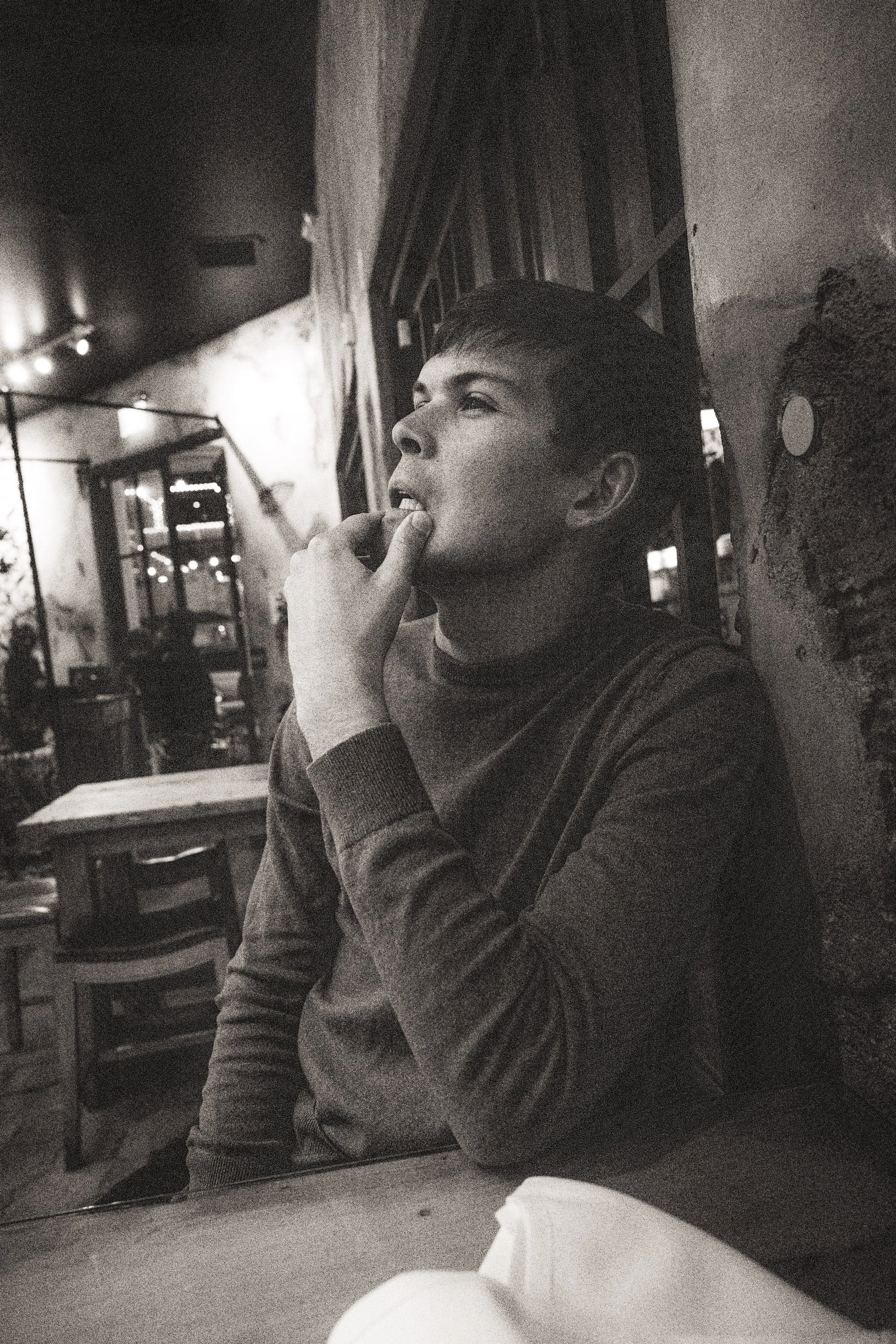
David, pondering existential dread
Makes sense, I guess. It was an intentionally vague question whose responses could range from mundane motivators to existential angst. After digesting the question a bit, David eventually settled on pursuing music. “It’s the only thing I ever saw as a dream for myself”, he said. “It’s a longshot, and there’s always something to chase”. Good thing he likes to run! Quite validating as well, knowing that one of the most successful people I know also turns to his artistic passions in times of uncertainty. I guess I must be doing something right!
2026 Me: Funny enough, I never included David’s response to the masculinity question in the initial blog post, which I still remember to this day. I asked him, as I asked everyone I interviewed, “What has masculinity done for you?”, and he said “Nothing good lol”. He went on to describe acts of aggression that ranged from playful to serious between old friends. I could feel the discomfort that recalling such proclivities elicited. He also made a point to include a handful of masculine figures as pillars of strength for him. Everyone who knows David knows that he’s a chill guy, and that he’s also very tenacious. When he puts his mind to something, he does it. He does everything within his power to stay sane and healthy, and I think he’s doing a pretty good job. Also, now that’s 2026 and I’ve had the pleasure of knowing Alysa Liu’s story, I can’t help but think of her response to an interviewer asking her about struggle: “I love struggling, actually. It makes me feel alive”.
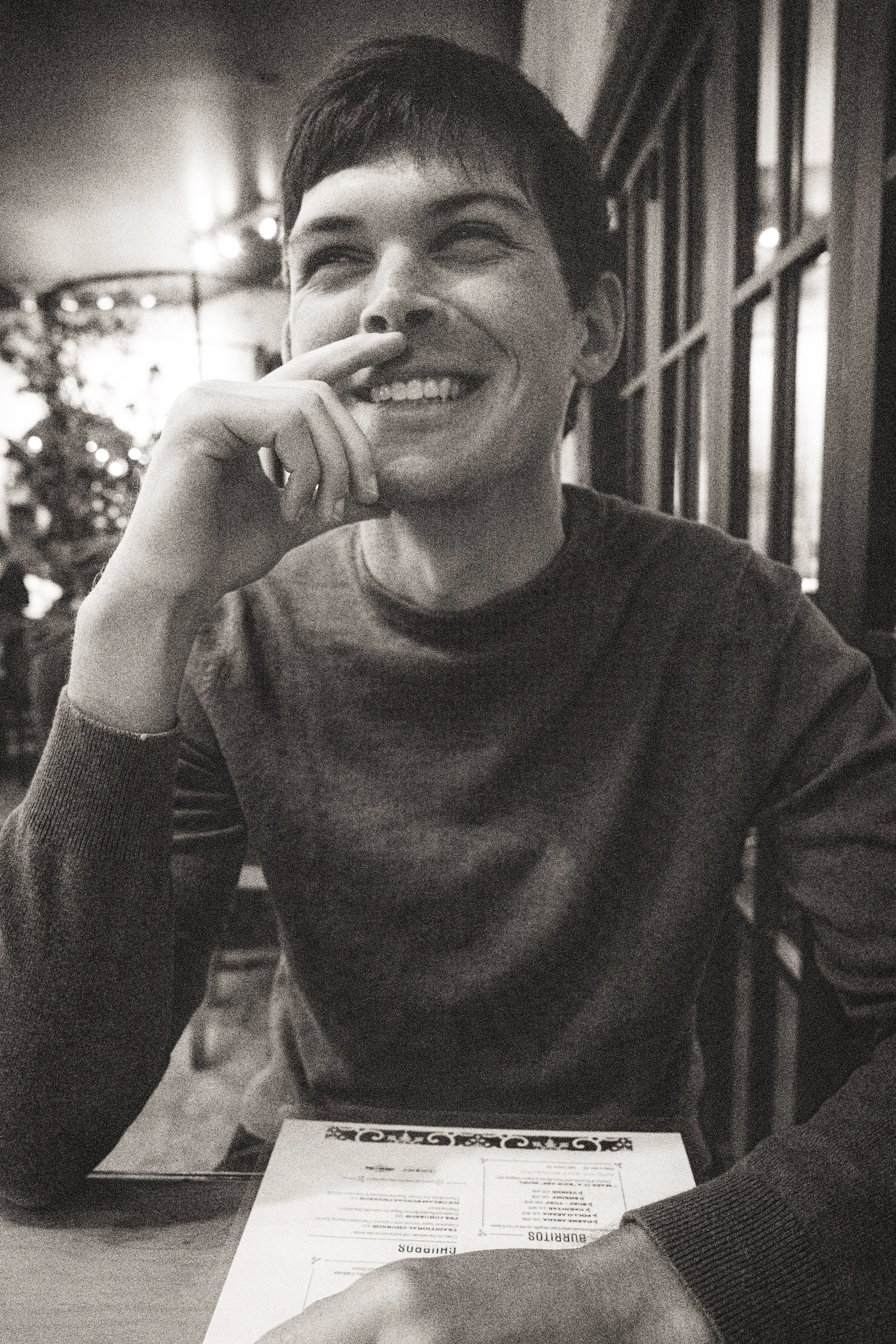
David, pondering masculinity
2024 Me: Title: My Relationship to Home is a Little Gray: “See ya in the future, perhaps,” she said with all the grace of an awkward younger sibling. Of course I’ll see her again, she’s my best friend’s little sister! This was never in question, but there were plenty of questions shared between us, and in this entry I’ll be highlighting one of them.
Kendall helped me get oriented to the Bay Area when I was moving out here from Florida four years ago, though she was surprised to hear how much she helped. Truthfully, just the idea that I would know someone in my new home on the other side of the country was enough for me. It’s a shame that it took four whole years for us to actually hang out, but that’s not a surprise given our introverted tendencies and busy lives. I say all this to say that I’ve been meaning to ask this question to Kendall for a long time, much longer than I’ve had the idea to do this blog schtick.
-“What do you think it says that we’re both from Crestview, both on the other side of the country, and both doing mental health work?”
“That it’s the ultimate trauma response LOL”
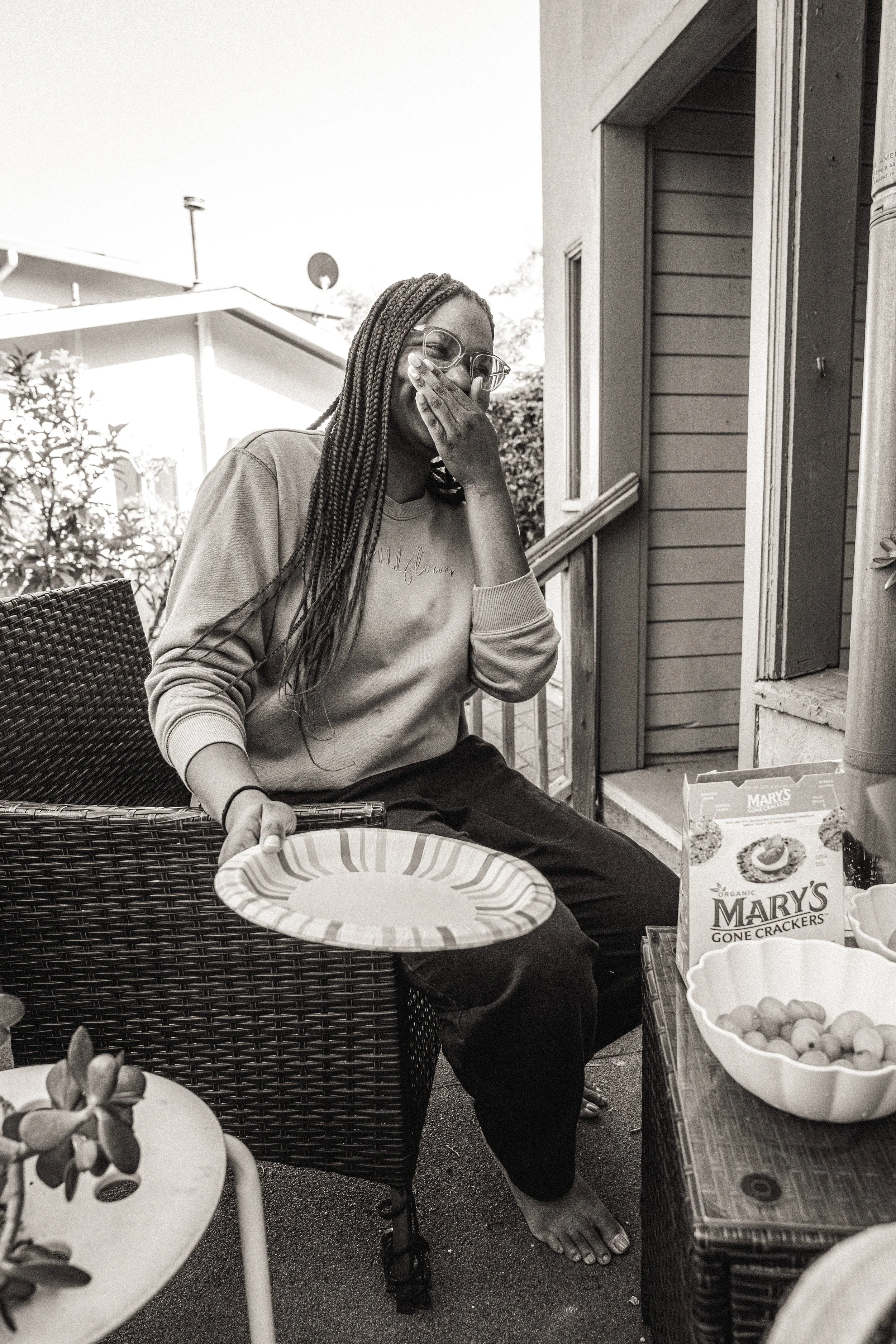
Sometimes the truth is funny
Trauma certainly played a role for both of us. We also have UC Berkeley in common. Kendall Gray, a Black, queer, neurodivergent therapist at a school in the Bay Area (primarily doing narrative therapy with kids!), earned her masters at Berkeley’s community mental health program. A few years later, I moved out to the Bay after I matched at Berkeley for my internship and stayed on for postdoc. While we spent some time chatting about our clinical experiences, I want to focus on the hometown connection we share, because the small town of Crestview, Florida is home to many traumas.
While keeping light on the details, Kendall described her traumas back home as “social failings”. My curiosity about this phrasing didn’t stop me from projecting a sense of self-blame onto it, but she was quick to correct me. “I could give you a more intersectional answer,” she said as her eyes rolled out of her head, “but it basically just means there are a lot of different variables at play that determined how things went for me socially”. This makes perfect sense to me, given her identities and the systems and culture back home; These are some of the same reasons I struggle to go back home too. I don’t enjoy it much, and this shouldn’t be a surprise if you know me. I hope people reading this back home don’t take offense because you’re probably on my shortlist of reasons to go back, which includes: 1) Family, 2) Friends, 3) Pounder’s, 4) Bamboo, and 5) McGuire’s. What I want you all back home to know, too, is that I really do think trauma plays a role in it for me as well, though this isn’t the blog to relitigate it all.
What we also have in common is a little bit of trauma mastery, which is a pretty common phenomenon in helping fields. Basically, trauma mastery is when you put yourself in situations that are close enough to previous traumas, in proximity or similarity, in an attempt to ‘make it right this time’ or to regain a sense of power over your own experiences. When I was in school, I’d always joke that everyone in psychology “has their story”, and there’s a lot of truth to that. What Kendall said that stood out was that she wants to be the person she needed when she was younger, and to give her kiddos the chance to rewrite their narratives. Primary school is a time that’s “rife for exclusion, and with opportunities for inclusion” she said, and that working in this setting “gives [her] more empathy for [her] younger self”.
I, on the other hand, fit the classic “hero” archetype for those familiar with family systems theories. While I still think it’s interesting that we both wound up out here in the Bay Area, the truth is that I would’ve been on this trajectory no matter where I wound up for internship, because it’s a path I’ve been on for a long time. Overall, I’m grateful for the path that’s led me to where I am, and thankful for the healing I’ve done along the way which clears the way for the healing I’m currently doing. Thank you for your grace on this journey.
2026 Me: In hindsight, I think I’ve softened by tune on returning home a bit, having returned home twice since writing this passage, though I still largely agree. I’m usually home for the holidays, and at a certain point I find myself counting down the days until I return to my new home in the bay. Interestingly enough, my experience the last two times visiting home were quite different, because my medication was different both times, and that had a huge affect on my experience and presentation with my friends. Kenney (Kendall’s brother and one of my BFF’s) saw me both times, and let me know just how much different I came across as a result of my medication. I think I finally got it figured out now.
Relevant side note, my therapist told me my entire life has been one big trauma response, so I think Kendall was onto something here.
Again, funnily enough, I didn’t include Kendall’s responses to masculinity related questions. I think that’s because my initial intention was to go through all these interview scenarios and string together their answers on a separate post that included everyone’s answers to the masculinity questions. Anyway, Kendall noted that the most impactful masculine figure in her life was her “amazing dad”, and made a point to say that she doesn’t really view him as a man, but an embodiment of power and joy. Having met the man, I definitely see where she’s coming from.
2024 Me: Title: Taylor Made Happiness: “I’m happy, I’m there, and it takes work to keep going”. Hoo boy was this a refreshing conversation to have. Especially after the week I just had - it was full of nothing. The most I did was write a poem that turned into a song I’ll never sing about how nothingness broke my heart (2026 me: cringe). Seeing Taylor’s heart so full with her self-proclaimed “boring” life was inspiring, especially knowing what I know of her story. Have I mentioned she’s won an Emmy?
-”What’s it like to have that kind of accolade at this age?”
“It definitely opens doors, but it also makes me feel like a fraud”, she said with her imposter syndrome on full display. Taylor Kidd Zegarra is a motion graphics artist whose passion is found at “the intersection of problem solving and creativity”. From getting laid off, to starting with a new company, to freelancing, to editing, years of experience and learning with others has taught her what she enjoys and what’s for her. She brought her contributions to the award-winning project, but because the category was in Journalism rather than Motion Graphics, she believes she still has work to do before setting sights on an Oscar. Personally, I say technicalities be damned!
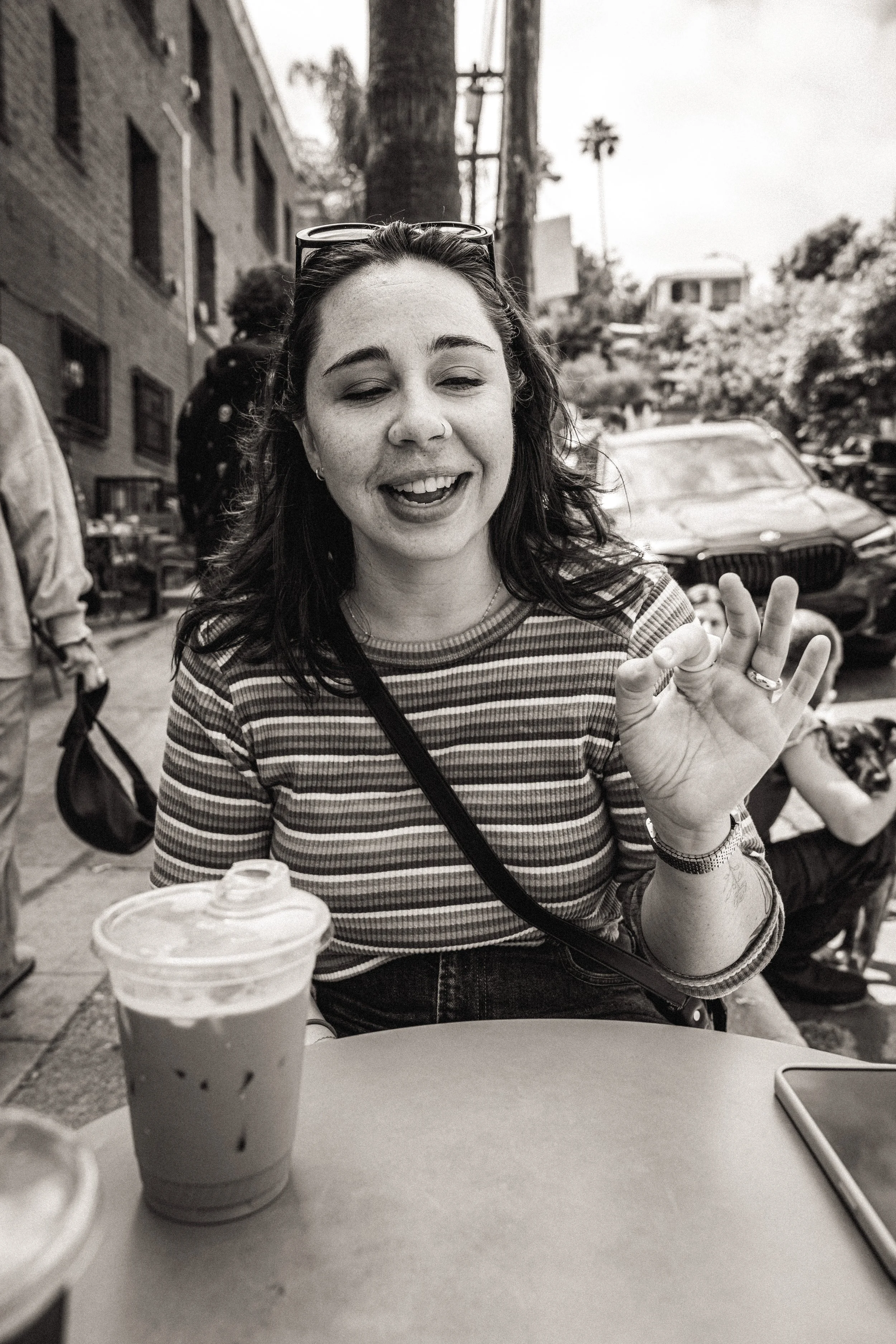
Taylor, being the opposite of a fraud
Taylor is another friend from Florida who’s now on the other side of the country. I met her when I was in my master’s program through my good friend Miguel, her late husband. Miguel died of cancer in November of 2019, just months before COVID changed the world. I’m grateful he lived long enough to make it to Level 40 on Pokemon Go, something I know made him happy, and something I’ll never accomplish. Miguel’s loss was crushing for everyone who knew him because he was and still is a shining beacon of optimism, hope, and positivity. I hadn’t seen Taylor since his funeral.
-”How have the last 5 years been for you?”
“Well, Miguel died three days before my birthday, so I’ll never forgive him for that lol. I had a trip planned for New York in December and went as the pandemic hit, and honestly, it was perfect timing because it gave me a much-needed break.” She went on to describe how answering the question “who am I now?” was at the center of the next three years in Florida. “I lost the person who taught me how to love myself. My whole life changed… It was trial and error for a while until I learned how to catch myself getting into ruts.” Cycling was another part of her healing, biking for cancer awareness and leading younger riders. Eventually, she got a freelancing opportunity out in Los Angeles, and has lived there for the past 2.5 years and has built a new foundation for herself.
Taylor hates the word “widow”. On top of making her feel old, it made dating even more complicated than it already is. The W-word would get many awkward reactions from men who were less comfortable talking about it than her, to the point where she just wouldn’t bring it up at all to save herself the hassle. Fortunately for her, she eventually met someone who was chill about it and has been in a relationship with him for a year now. “Dating was bad, I needed to do this for me. Miguel would want me to be happy”.
And happy she is! Taylor describes herself as someone who’s “excited to be excited”. Happiness is simple for her, and it looks like animation, learning Spanish, and continuing to cycle. She also left me with the nice irony that she’s going back to enjoy children’s animation that she missed out on as a kid (she grew up “watching The Godfather instead of The Disney Channel”). Can you believe that? An Emmy award-winning graphics artist who didn’t grow up watching cartoons? Tell me that’s a “boring” story.
2026 Me: I still remember enjoying this conversation, as well as the blog accompanying it. I need to head back to LA sometime. Anyway, I wanted to add Taylor’s response to the “What has masculinity done for you?” question, which was a simple “Not much”. She always considered herself as having some masculine traits, and also noted that most of the important men in her life, including her father, were “liberated” and emotionally attuned. Shocker: having a good dad might be a good thing for people? Maybe? Looking into it…
2024 Me: Title: Enter, Darius: I wanted to start this entry with another question I had for Taylor to set the stage for a discussion on men and male friendships.
-“Could you describe Miguel as a masculine figure?”
“He was unlike anyone else… soft, tender, and always interested in others.” She went on to describe how typical gender norms were reversed in their relationship, as Miguel was quite emotionally engaged while Taylor was much more avoidant. Makes sense for a therapist to have high emotional intelligence. I echo Taylor’s description of Miguel, as I always found him to be warm and engaging. I could tell he was special, and one reason his death was so tragic for me was that I wanted him to be a life-long friend. This is significant because I can’t say that I reached a level of closeness like that with any other male friend since I moved away from home for grad school.
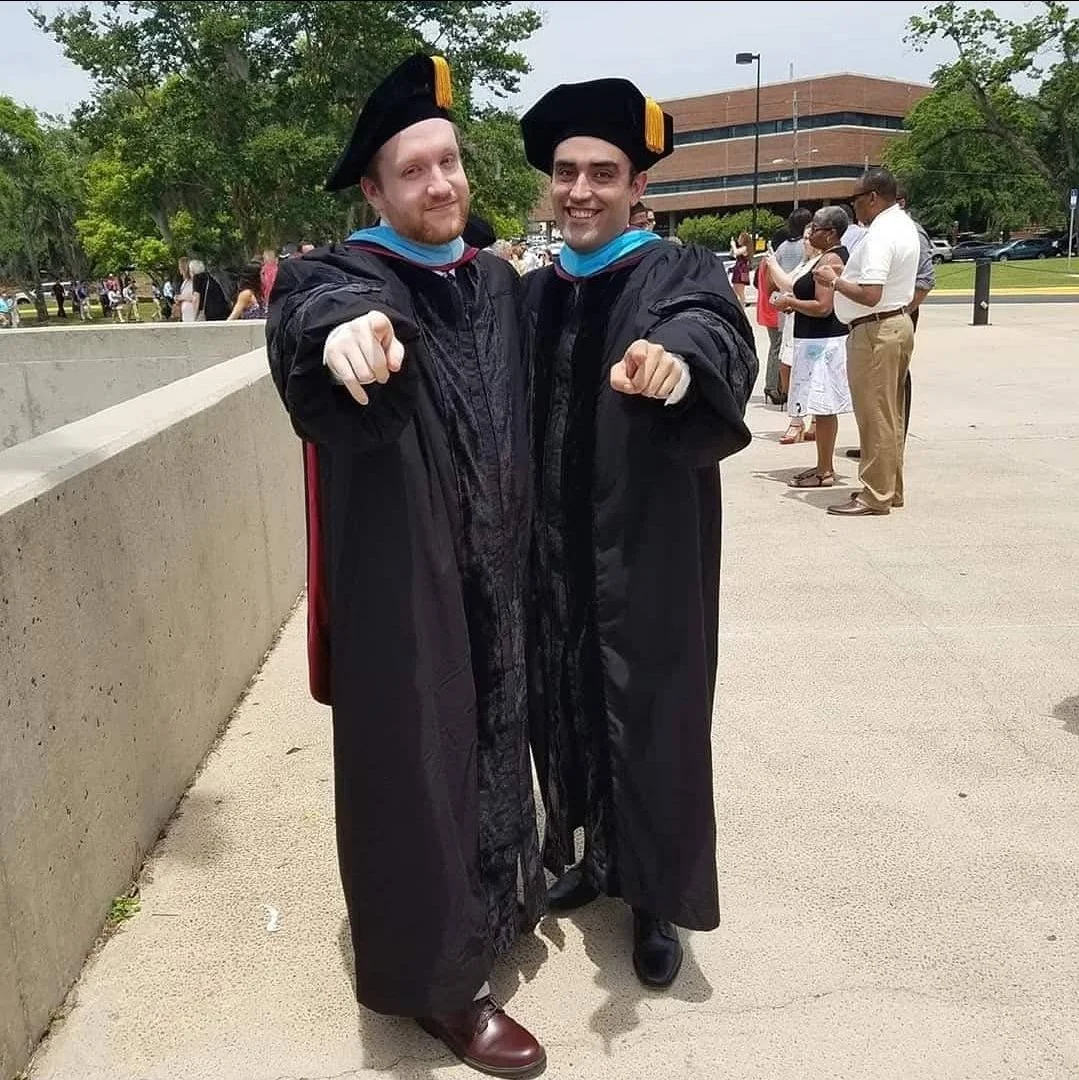
Don’t ask me why we’re pointing at the camera lol
I’ve certainly noticed my relative lack of new male friendships made in adulthood. There are reasons for it, the field I’m in being mostly occupied by women is chief among them, as well as my own disengagement with traditionally masculine norms, but that’s not to say that there haven’t been opportunities for deeper connections. So what gives? I’ve seen too many headlines about a male-loneliness epidemic (on top of more general loneliness issues everyone experiences) to believe this is just a me-thing. How many new deep connections have you made in adulthood? Regardless of when you made your friends, can you be vulnerable with them without using substances or negging each other? It all begs the question…
-“What gets in the way of male friendships?”
Enter Darius, a friend since I’ve been in California, with his thoughts. “A lack of honesty, vulnerability, and emotional tools” he said straightforwardly and simply. He went on to discuss the role that patriarchy plays in muddling the expectations that men have for how they communicate.
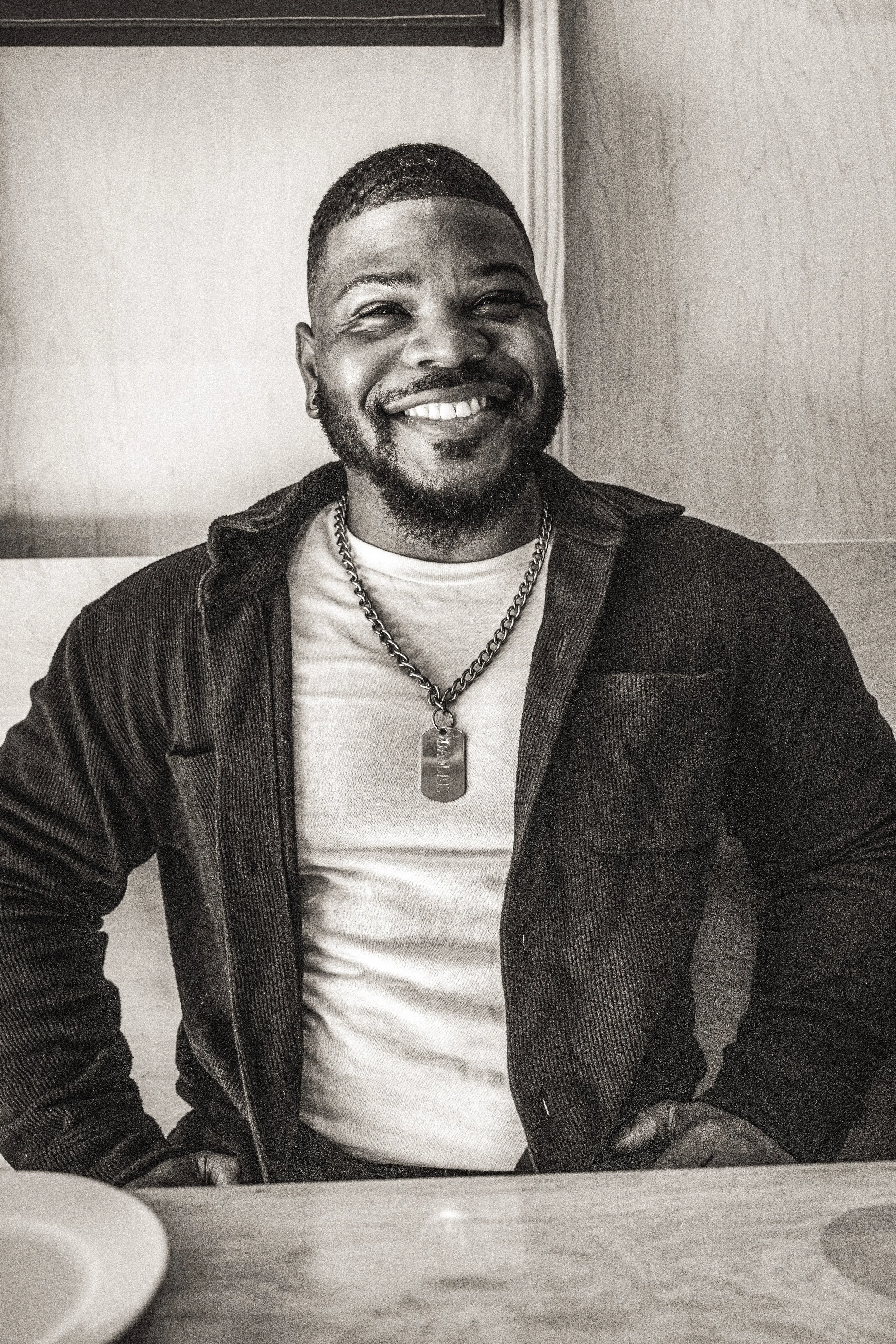
Proof that Darius is the most photogenic person I know
2026 Me: This is as far as my 2024 self wrote. Shame, because there’s definitely more to say with this interview, and with my experiences with Darius. In response to the question above, he also added “I’m so excited I’m gay and get to avoid the indictment on masculinity of not being vulnerable”. He dropped many more bangers on this day.
-”What has masculinity done for you?”
“It’s given me privilege, as it’s part of my full identity as a black man and a gay man. I don’t specifically care much about it, but I benefit a lot. I present as butch, but I’m also gay, so I have the liberty of not being beholden to traditional masculine norms”.
-”What do men need?”
“Prayer lol”, “A willingness to engage in the process”, “open hearts”, “I don’t actually know”.
-”What does healthy masculinity look like?”
“A protective, positive role model that contributes and provides. Within a system where men are privileged, it means redistribution”.
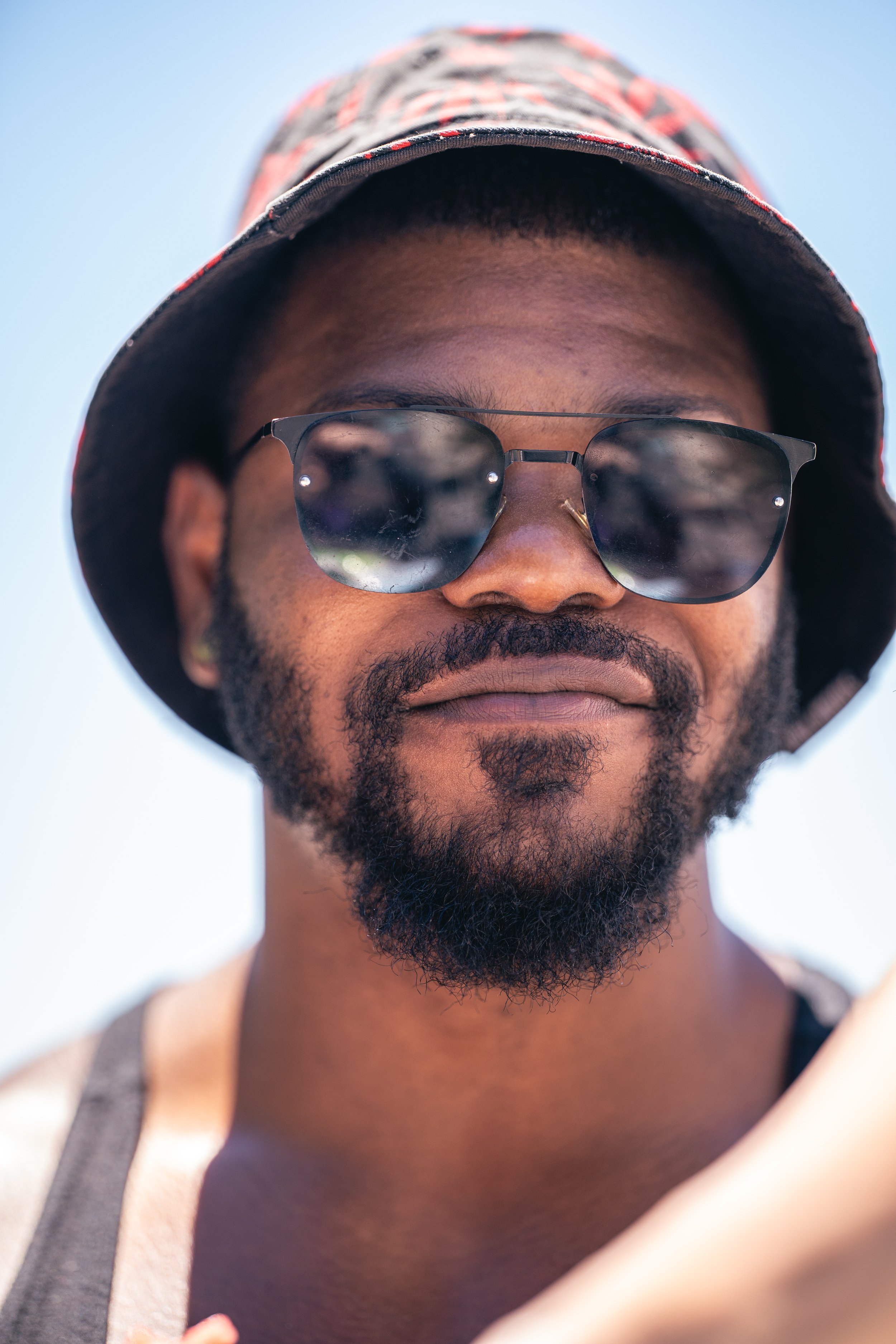
More proof that Darius is photogenic, and also effortlessly cool
Darius is definitely the closest guy friend I’ve made since moving to California. He’s a very busy person; I get overwhelmed whenever I think about all the stuff he does, so I cherish the time we get to spend together. He’s a hugger, and everyone who knows him knows that he lights up the room. He’s shown up for me in my most vulnerable and distressing moments. He visited me in the hospital during my first manic episode, and helped keep me grounded during my second hospitalization. He asked me to photograph his proposal, and the only reason it worked was because I hadn’t met his fiance yet, so he didn’t know my face, which allowed me to casually stroll by and capture the big moment.
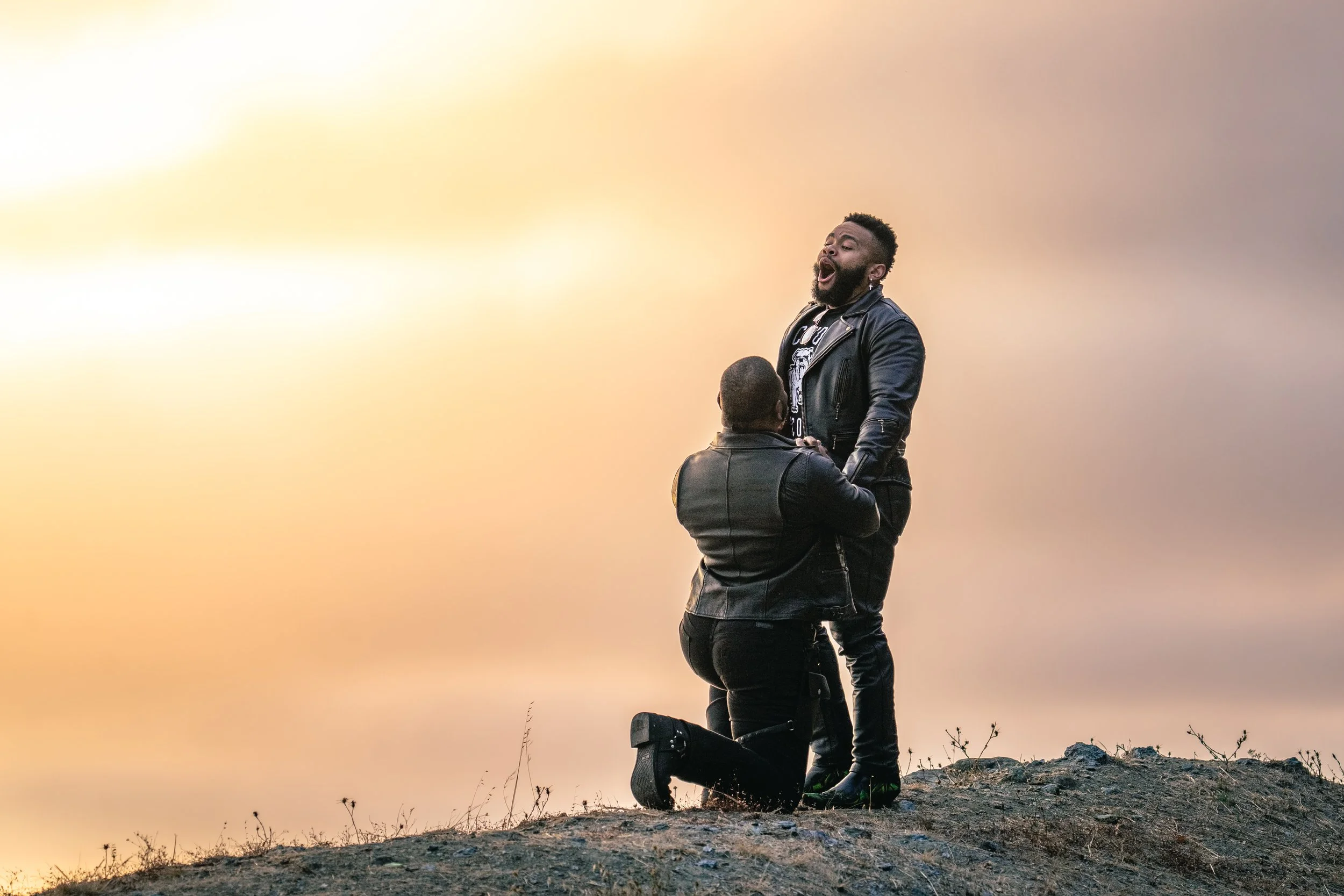
Book me for your next gig, yall
The reason I didn’t write more in Darius’s section of the blog was that I became overwhelmed with thoughts on how to tie everything together, as it relates to the masculinity questions I was asking. I had wanted to ask one or two more friends these questions as well, to get additional perspectives from non-binary folks. I was also overwhelmed with the prospect of joblessness, depression and my medication putting a damper on my thoughts/personality, which all combined to kill my creative drive. I didn’t engage with photography for a full year.
In the interim, I felt a lot of shame for abandoning the project, and also a lot of shame thinking my perspective on masculinity was important to share. I’m not necessarily adding anything new to the discussion. I lean toward gender abolition, and can speak to the social construct and spectrum of it all, and could probably use a bunch of academic jargon in the process.
In simpler terms though, I’ve never really questioned my maleness or masculinity, despite a long history of bullying that tried to convince me I wasn’t man enough. My rationale was always “Well, I’m a guy, and I do ____, therefore ____ must be masculine”. The further you go with that logic, the more you begin describing universal human experiences, and you can unravel the rest from there.
I think I’ve come to a satisfying conclusion with this project, and all it took was the better part of an evening. What I’d like to maybe take from this rediscovered project, moving forward, is more photoshoots with friends, regardless of whether I have questions for them or not.